
Welcome! This section introduces the 2014 Jeep Wrangler, providing access to its official owner’s manual in convenient PDF format for free download.
Essential Information: The manual details maintenance, troubleshooting, and all vehicle features, ensuring optimal performance and safe operation of your Wrangler.
Resource Access: Explore online viewing options or download the complete guide to your computer or mobile device for easy reference anytime, anywhere.
Overview of the Vehicle
The 2014 Jeep Wrangler remains a highly capable and iconic off-road vehicle, celebrated for its rugged design and open-air freedom. This owner’s manual serves as a comprehensive guide to understanding and maintaining your Wrangler, covering everything from basic operation to detailed system explanations.
Key Features: The manual illustrates standard and optional equipment, even those not currently installed on your specific vehicle. It’s a vital resource for both new owners and experienced Jeep enthusiasts. Accessing the PDF version allows for convenient offline viewing and printing.
Understanding Your Wrangler: This guide provides insights into the vehicle’s capabilities, ensuring you can maximize its performance on and off the road. Download the manual today for a complete understanding of your 2014 Jeep Wrangler!
Importance of the Owner’s Manual
Your 2014 Jeep Wrangler’s owner’s manual is an indispensable resource, offering critical information for safe and efficient vehicle operation. It details maintenance schedules, fluid checks, and troubleshooting procedures, helping you proactively address potential issues.
Safety and Performance: Understanding the manual’s guidance on features like the 4×4 system, braking system, and airbag system is crucial for maximizing both safety and performance. The downloadable PDF format provides convenient access to this vital information.
Vehicle Longevity: Proper maintenance, as outlined in the manual, contributes significantly to the longevity and reliability of your Wrangler. Download your free copy today and become fully acquainted with your vehicle!

Understanding Your 2014 Jeep Wrangler
Explore your Wrangler! This section guides you through locating the VIN, understanding key features, and accessing detailed specifications from the owner’s manual.
Vehicle Identification Number (VIN) Location
Locating your 2014 Jeep Wrangler’s Vehicle Identification Number (VIN) is crucial for various reasons, including warranty claims, service history tracking, and vehicle identification.
According to the owner’s manual, you can find the VIN in several places on your vehicle. Firstly, it’s located on a label affixed to the driver’s side dashboard, visible through the windshield.
Secondly, the VIN is stamped on the frame rail, specifically on the driver’s side, near the steering column. Additionally, it appears on your vehicle’s registration and insurance documents. Knowing the VIN allows you to access specific information about your Wrangler’s build and features.
Key Features and Specifications
The 2014 Jeep Wrangler boasts a robust 3.6L Pentastar V6 engine, delivering 285 horsepower and 260 lb-ft of torque. It’s available in various trims, including Sport, Sahara, and Rubicon, each offering unique features.
Key features include its iconic removable top and doors, providing an open-air driving experience. Standard equipment encompasses air conditioning, a sound system, and stability control. The Rubicon trim adds enhanced off-road capabilities with features like locking differentials and heavy-duty axles.
Specifications highlight a five-speed automatic or six-speed manual transmission, and a capable four-wheel-drive system. The Wrangler’s ground clearance and approach/departure angles make it a formidable off-roader.

Operating Your 2014 Jeep Wrangler
Learn to confidently operate your 2014 Wrangler! This section covers starting, driving modes, dashboard indicators, and instrument controls for a safe journey.
Starting and Stopping the Engine
Starting Procedure: Ensure the parking brake is engaged, and the transmission is in Park or Neutral. Insert the key into the ignition and turn it to the ‘Start’ position, releasing once the engine ignites. Avoid prolonged cranking to prevent starter damage.
Engine Warm-up: Allow the engine to warm up briefly, especially in cold weather, for optimal performance. Monitor the dashboard indicators for any warning lights.
Stopping Procedure: Gently apply the brakes to bring the vehicle to a complete stop. Shift the transmission into Park and engage the parking brake. Turn the ignition key to the ‘Off’ position, removing the key to prevent accidental operation.
Emergency Stop: In emergency situations, prioritize safe braking and steering control. Once stopped, activate hazard lights and follow appropriate safety procedures.
Driving Modes and Capabilities
4×4 System: The 2014 Wrangler offers various 4×4 modes – 2WD, 4H, and 4L – selectable via a dashboard-mounted lever. 4H is for on-road, low-traction conditions, while 4L provides maximum torque for challenging off-road terrain.
Off-Road Capability: This vehicle excels in off-road environments due to its high ground clearance, robust suspension, and durable drivetrain. Utilize low-range gearing for steep inclines and rocky obstacles.
On-Road Performance: In 2WD mode, the Wrangler delivers a comfortable on-road driving experience; Be mindful of weather conditions and adjust driving accordingly.
Driving Considerations: Always consult the owner’s manual for detailed instructions on engaging and disengaging 4×4 modes, ensuring safe and effective operation.
Understanding the Dashboard Indicators
Warning Lights: The 2014 Wrangler’s dashboard features critical warning lights. The check engine light indicates potential engine issues, while the ABS light signals a problem with the anti-lock braking system. A low oil pressure light demands immediate attention.
Information Lights: Indicator lights display the status of systems like headlights, turn signals, and high beams. The 4WD indicator confirms engagement of the four-wheel-drive system.
Gauge Information: The speedometer, tachometer, fuel gauge, and temperature gauge provide essential driving information. Monitor these gauges regularly for optimal vehicle performance.
Manual Reference: Refer to your owner’s manual for a comprehensive explanation of each indicator, its meaning, and recommended actions. Ignoring warning lights can lead to serious damage.
Controls and Instruments
Steering Wheel Controls: The 2014 Wrangler’s steering wheel houses controls for audio, cruise control, and phone functions, enhancing driver convenience. Familiarize yourself with their location and operation.
Climate Controls: Easily adjust temperature, fan speed, and airflow direction using the intuitive climate control system. Select between various modes for optimal comfort.
Infotainment System: The Wrangler features an infotainment system with a touchscreen display. Control audio, navigation, and vehicle settings through this interface.
Essential Instruments: Understand the function of the gear selector, parking brake, and windshield wipers. Consult your owner’s manual for detailed instructions on each control and instrument.

Maintenance and Service
Routine Care: This section details the recommended maintenance schedule, fluid checks, tire care, and essential service procedures for your 2014 Jeep Wrangler.
Longevity: Following these guidelines ensures optimal performance, reliability, and extends the lifespan of your vehicle, as outlined in the owner’s manual.
Recommended Maintenance Schedule
Staying Current: Your 2014 Jeep Wrangler’s longevity depends on adhering to the recommended maintenance schedule detailed within the owner’s manual. This schedule outlines crucial inspections and services at specific mileage intervals.
Key Services: Expect routine checks of fluids – oil, coolant, brake fluid, and power steering fluid – alongside filter replacements (oil, air, cabin). Tire rotations and inspections are vital for even wear and safety.
Preventative Measures: The manual also highlights periodic services like spark plug replacement, belt and hose inspections, and brake system evaluations. Following this schedule proactively prevents costly repairs and ensures peak performance, maximizing your Wrangler’s reliability and resale value.
Fluid Checks and Replacements
Essential Fluids: Maintaining correct fluid levels is critical for your 2014 Jeep Wrangler’s operation. The owner’s manual provides detailed instructions for checking engine oil, coolant, brake fluid, power steering fluid, and windshield washer fluid.
Replacement Intervals: Regular fluid replacements are equally important. Oil changes should occur at specified intervals, as outlined in the maintenance schedule. Coolant flushes, brake fluid exchanges, and power steering fluid replacements prevent corrosion and maintain system efficiency.
Proper Procedures: The manual details the correct fluid types and procedures for safe and effective replacement, ensuring optimal performance and preventing damage to vital components. Always dispose of used fluids responsibly.
Tire Information and Maintenance
Tire Specifications: Your 2014 Jeep Wrangler’s owner’s manual details the correct tire size, load range, and speed rating for optimal performance and safety. Understanding these specifications is crucial when replacing tires.
Pressure Monitoring: The manual explains the Tire Pressure Monitoring System (TPMS) and how to interpret its warnings. Maintaining proper tire pressure improves fuel efficiency, handling, and tire lifespan. Regular checks are essential.
Rotation & Inspection: The guide outlines recommended tire rotation patterns and visual inspection procedures for wear and damage. Consistent maintenance extends tire life and ensures safe driving conditions for your Wrangler.

Safety Features
Critical Systems: This section of the 2014 Jeep Wrangler manual details the airbag system, seat belt usage, and Electronic Stability Control (ESC) functions.
Protecting Occupants: Learn how these features work together to maximize safety for you and your passengers during various driving conditions.
Airbag System
Understanding Airbag Deployment: The 2014 Jeep Wrangler’s owner’s manual provides detailed information regarding the airbag system, explaining when and how airbags are designed to deploy during a collision.
Supplemental Restraint System: It emphasizes that airbags are a supplement to seat belts, not a replacement, and proper seat belt use is crucial for optimal protection.
Component Locations: The manual illustrates the locations of all airbags within the vehicle – front, side, and curtain airbags – and outlines potential risks associated with improper handling or modifications.
Safety Precautions: Important warnings are included regarding children and the airbag system, stressing the necessity of appropriate child restraint systems and never placing a rear-facing infant seat in front of an active airbag.
Seat Belts and Child Restraints
Proper Seat Belt Usage: The 2014 Jeep Wrangler owner’s manual thoroughly details the correct way to use seat belts for all occupants, emphasizing their life-saving importance in any collision.
Seat Belt Features: It explains features like adjustable shoulder belt anchors and locking mechanisms, ensuring a secure and comfortable fit for all body types.
Child Restraint Systems: Detailed guidance is provided on selecting and properly installing appropriate child restraint systems (car seats) based on the child’s age, weight, and height.
LATCH System: The manual illustrates the location and proper use of the LATCH (Lower Anchors and Tethers for Children) system for easier and more secure car seat installation, alongside traditional seat belt installation methods.
Electronic Stability Control (ESC)
ESC System Overview: The 2014 Jeep Wrangler’s owner manual explains the function of the Electronic Stability Control (ESC) system, a crucial safety feature designed to assist the driver in maintaining control during challenging driving conditions.
How ESC Works: It details how ESC detects and mitigates skidding or loss of control by selectively applying brakes to individual wheels and adjusting engine power.
ESC Indicator Light: The manual clarifies the meaning of the ESC indicator light on the dashboard, indicating when the system is active or if a fault is detected.
System Limitations: It also emphasizes that ESC is not a substitute for careful driving and may have limitations in certain extreme situations, like icy roads.

Detailed System Information
In-Depth Guides: This section of the 2014 Jeep Wrangler owner’s manual provides comprehensive details on key vehicle systems, like 4×4, braking, and cooling.
Technical Insights: Discover operational specifics and maintenance recommendations for optimal performance and longevity of your Wrangler’s core components.
4×4 System Operation
Understanding Your Wrangler’s 4×4: The 2014 Jeep Wrangler owner’s manual thoroughly explains the operation of its robust four-wheel drive system. It details the different modes – 2WD, 4WD High, and 4WD Low – and when to engage each for optimal traction and control.
Shifting Procedures: Learn the correct procedures for shifting into and out of 4WD, including speed limitations and precautions to avoid damaging the transfer case. The manual clarifies the function of the transfer case lever and any electronic controls involved.
System Components: Diagrams and explanations illustrate the key components of the 4×4 system, such as the transfer case, front and rear axles, and driveshafts. This knowledge aids in understanding potential issues and proper maintenance.
Troubleshooting Tips: The manual also provides basic troubleshooting guidance for common 4×4 related problems, helping owners identify and address minor issues before seeking professional assistance.
Braking System
Comprehensive Braking Details: The 2014 Jeep Wrangler owner’s manual provides a detailed overview of the vehicle’s braking system, including its components and operation. It explains the function of the master cylinder, brake lines, calipers, and rotors or drums.
ABS Functionality: Learn about the Anti-lock Braking System (ABS) and how it enhances braking performance during emergency stops and on slippery surfaces. The manual clarifies the normal operation of ABS, including pulsation felt during activation.
Brake System Maintenance: Guidance on inspecting brake pads, rotors, and fluid levels is included, along with recommended replacement intervals. Proper brake maintenance is crucial for safety and optimal performance.
Troubleshooting & Warnings: The manual outlines potential brake system issues and provides basic troubleshooting steps. It also includes important warnings regarding brake system modifications and repairs.
Cooling System
Engine Temperature Regulation: The 2014 Jeep Wrangler owner’s manual details the cooling system’s role in maintaining optimal engine temperature. It explains the function of key components like the radiator, water pump, thermostat, and cooling fan.
Coolant Information: Specific coolant types recommended for your Wrangler are listed, along with instructions for checking and topping off coolant levels. Using the correct coolant is vital to prevent corrosion and ensure efficient heat transfer.
System Inspection & Maintenance: The manual guides owners through inspecting hoses, belts, and the radiator for leaks or damage. Recommended maintenance intervals for coolant flushes are also provided.
Overheating Prevention: Learn to recognize signs of overheating and appropriate actions to take, including safely pulling over and allowing the engine to cool. Ignoring overheating can cause severe engine damage.

Troubleshooting Common Issues
Diagnostic Guidance: This section of the 2014 Jeep Wrangler manual offers solutions for engine, transmission, and electrical problems, aiding quick diagnosis.
Problem Resolution: Find helpful tips and potential fixes for frequently encountered issues, empowering owners to address minor concerns independently.
Engine Problems
Addressing Engine Concerns: The 2014 Jeep Wrangler owner’s manual provides a dedicated section for diagnosing common engine issues. It covers potential causes for starting difficulties, rough idling, and reduced power, offering troubleshooting steps for each scenario.
Diagnostic Procedures: Owners can find guidance on checking fluid levels, inspecting spark plugs, and identifying potential sensor malfunctions. The manual emphasizes the importance of addressing warning lights promptly and provides instructions for interpreting engine codes.
Safety First: It also stresses safety precautions when working on the engine, advising owners to disconnect the battery and avoid working on a hot engine. For complex issues, the manual recommends seeking professional assistance from a qualified mechanic;
Transmission Issues
Understanding Transmission Concerns: The 2014 Jeep Wrangler owner’s manual details potential transmission problems and their possible causes. It addresses issues like slipping gears, harsh shifting, and unusual noises during operation, offering initial troubleshooting guidance for owners.
Diagnostic Steps: The manual instructs owners on checking transmission fluid levels and condition, noting the importance of using the correct fluid type. It also outlines basic inspections for leaks and damage to transmission components.
Professional Service: For more complex transmission issues, the manual strongly advises seeking professional diagnosis and repair from a certified mechanic, emphasizing the intricate nature of the system.
Electrical System Concerns
Addressing Electrical Issues: The 2014 Jeep Wrangler owner’s manual provides guidance on diagnosing common electrical problems. It covers issues like malfunctioning lights, power window failures, and problems with the vehicle’s charging system, offering initial troubleshooting steps.
Fuse Box Information: Detailed diagrams of the fuse box locations and fuse assignments are included, enabling owners to quickly identify and replace blown fuses. The manual stresses the importance of using the correct fuse amperage.
Professional Diagnosis: For complex electrical concerns, such as issues with the vehicle’s computer or wiring harness, the manual recommends seeking professional assistance from a qualified technician.

Warranty Information
Coverage Details: This section outlines the 2014 Jeep Wrangler’s basic vehicle and powertrain warranties, detailing coverage periods and what is included.
Important Notes: Refer to the owner’s manual for specific terms, conditions, and procedures for making a warranty claim.
Basic Vehicle Warranty
Comprehensive Coverage: The 2014 Jeep Wrangler’s Basic Vehicle Warranty provides coverage for defects in materials or workmanship for a specified period. Typically, this warranty covers a duration of 3 years or 36,000 miles, whichever comes first, from the original purchase date.
What’s Included: This warranty encompasses repairs or replacements needed to correct manufacturing defects in various vehicle components, including but not limited to, the engine, transmission, chassis, and body. It’s crucial to consult the owner’s manual for a complete list of covered parts and exclusions.
Important Considerations: Regular maintenance, as outlined in the owner’s manual, is essential to maintain warranty validity. Damage resulting from misuse, accidents, or unauthorized modifications may void the warranty.
Powertrain Warranty
Extended Protection: The 2014 Jeep Wrangler’s Powertrain Warranty offers extended coverage specifically for the vehicle’s core components. This typically extends for 5 years or 100,000 miles, whichever occurs first, from the original purchase date, exceeding the basic vehicle warranty period.
Key Components Covered: The powertrain includes the engine, transmission, and drivetrain. This warranty safeguards against defects in these critical areas, ensuring long-term reliability and peace of mind for the vehicle owner. Refer to the owner’s manual for a detailed list.
Maintaining Coverage: Adhering to the recommended maintenance schedule outlined in the owner’s manual is vital for maintaining powertrain warranty validity. Proper care ensures optimal performance and protects your investment.
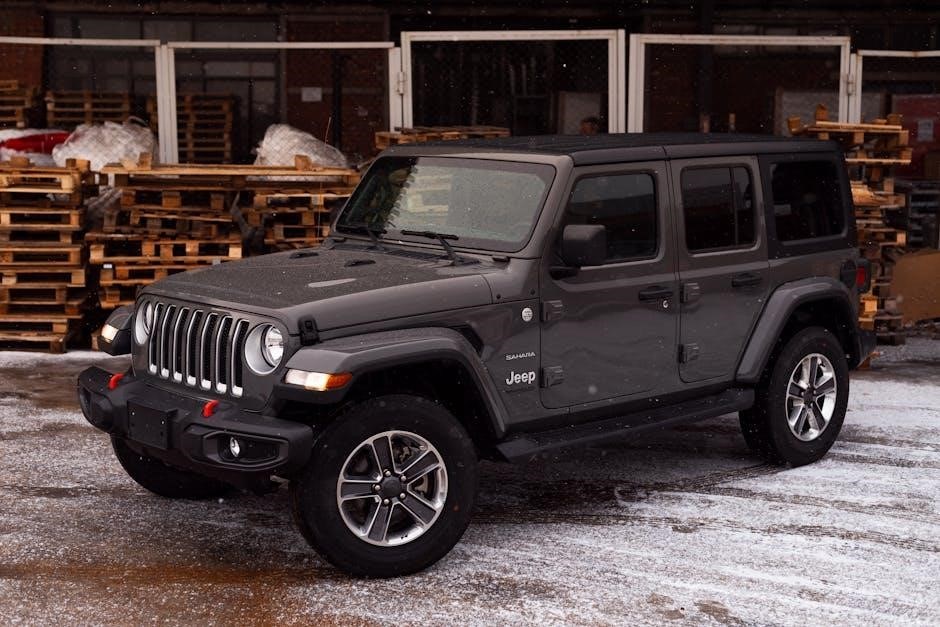
Downloading the 2014 Jeep Wrangler Owner’s Manual
Easy Access: Obtain your 2014 Jeep Wrangler’s owner’s manual instantly through official online resources, available as a free PDF download.
Convenient Options: View, print, or download the manual directly to your computer or mobile device for quick and easy reference.
Official Online Resources
Accessing Your Manual: Several official online platforms provide direct access to the 2014 Jeep Wrangler owner’s manual. These resources offer a convenient way to view, download, and utilize the comprehensive guide without needing a physical copy.
Jeep’s Official Website: The primary source is the official Jeep website, where you can typically find a dedicated section for owner’s manuals; Simply navigate to the support or owner’s section and search for the 2014 Wrangler.
Dedicated Manual Websites: Numerous websites specialize in hosting vehicle owner’s manuals, often providing a user-friendly interface for searching and downloading. These sites compile manuals from various manufacturers, including Jeep.
Reliable Links: Ensure you are utilizing legitimate websites to safeguard against potential malware or inaccurate information; Look for official Jeep branding or trusted automotive resource platforms.
PDF Download Instructions
Downloading the Manual: Once located on an official website, downloading the 2014 Jeep Wrangler owner’s manual as a PDF is typically straightforward. Look for a prominent “Download” button or link associated with the manual.
PDF Reader Required: Ensure you have a PDF reader installed on your device (e.g., Adobe Acrobat Reader, Preview). If not, download and install one before proceeding.
Save Location: The website will likely prompt you to choose a save location on your computer or device. Select a folder where you can easily find the file later.
File Size & Time: Note the file size before downloading, as larger manuals may take longer. Once downloaded, open the PDF to access the complete owner’s guide.
Accessing the Manual on Mobile Devices
Mobile Viewing Options: To access the 2014 Jeep Wrangler owner’s manual on smartphones or tablets, several options are available. If downloaded as a PDF, utilize a mobile PDF reader app like Adobe Acrobat Reader or similar.
Online Access: Alternatively, access the manual directly through the official Jeep website using your mobile browser. This eliminates the need for a download and ensures you have the latest version.
App Functionality: Some apps offer features like search, bookmarks, and zoom for easier navigation on smaller screens. Ensure your device has sufficient storage space for the PDF.

Additional Resources
Further Support: Explore Jeep customer support for assistance and connect with fellow Wrangler owners through online forums and communities for shared knowledge.
Jeep Customer Support
Need Direct Assistance? Jeep provides dedicated customer support channels to address your specific questions and concerns regarding your 2014 Wrangler. For immediate help, consider utilizing the official Jeep website, which often features frequently asked questions and troubleshooting guides tailored to your vehicle model.
Contact Options: You can typically reach Jeep customer support via phone, allowing for direct conversation with a knowledgeable representative. Alternatively, many inquiries can be efficiently handled through online chat or email submission forms. Be prepared to provide your vehicle’s VIN for quicker and more accurate assistance.
Official Website: The official Jeep website is the primary hub for accessing support resources and staying updated on any recalls or service bulletins related to your 2014 Wrangler.
Online Jeep Forums and Communities
Connect with Fellow Owners: Numerous online Jeep forums and communities offer a wealth of information and support for 2014 Wrangler owners. These platforms are invaluable resources for troubleshooting issues, sharing modifications, and gaining insights from experienced enthusiasts.
Shared Knowledge: Members frequently discuss the owner’s manual, interpreting specific sections and offering practical advice based on real-world experiences. You can often find answers to questions not explicitly covered in the official documentation.
Community Benefits: Participating in these communities allows you to connect with like-minded individuals, learn about common problems, and discover helpful tips for maintaining your Wrangler.