Article Plan: Con Frida en el Altiplano PDF
This article details a resource for Spanish language learners: “Con Frida en el Altiplano.” It explores the PDF’s educational value, focusing on comprehension, grammar, and cultural insights derived from the story.
“Con Frida en el Altiplano” is a captivating Spanish-language reader designed specifically for intermediate learners. Published as part of the “Serie América Latina” by Dolores Soler-Espiauba, this engaging story offers a unique blend of cultural immersion and linguistic practice. Available in Kindle edition format, the book provides accessibility for a wide range of readers, allowing them to enjoy the narrative on various devices – Kindle e-readers, PCs, phones, and tablets.
The narrative centers around Mikil Van Heyderweide, a Dutch medical student, and his unfortunate experience in Bolivia. The story quickly introduces a central conflict: the theft of Mikil’s beloved bicycle, affectionately named “Frida.” This event propels Mikil on a journey through the Bolivian Altiplano, providing a rich backdrop for language learning and cultural exploration.
Beyond the compelling storyline, “Con Frida en el Altiplano” is often accompanied by supplementary PDF resources. These materials are specifically crafted to enhance the learning experience, featuring a variety of exercises and activities designed to reinforce comprehension and grammatical skills. The book’s appeal lies in its ability to make language acquisition both enjoyable and effective.
Author Background: Dolores Soler-Espiauba
Dolores Soler-Espiauba is the author behind “Con Frida en el Altiplano,” a key component of the “Serie América Latina” aimed at Spanish language acquisition. While detailed biographical information readily available online is limited, her work clearly demonstrates a dedication to creating accessible and culturally relevant learning materials.
Soler-Espiauba’s focus with the “Serie América Latina” is evident in her choice of settings and themes. She skillfully integrates authentic cultural elements into her narratives, providing learners with a genuine glimpse into Latin American life. “Con Frida en el Altiplano” specifically showcases the unique environment of the Bolivian Altiplano, enriching the learning experience beyond simple vocabulary and grammar.
Her approach to language teaching appears to prioritize contextual learning. By embedding linguistic concepts within a compelling story, she encourages readers to naturally absorb the language. The accompanying PDF resources, filled with comprehension questions and exercises, further solidify this pedagogical approach. Soler-Espiauba’s work is valued for its practicality and effectiveness in fostering Spanish language proficiency.
Overview of the “Serie América Latina”
The “Serie América Latina” is a collection of graded readers designed to facilitate Spanish language learning through engaging narratives. “Con Frida en el Altiplano” is a prominent title within this series, specifically tailored for intermediate learners. The series’ core objective is to immerse students in the language and culture of various Latin American countries.
Each book within the series focuses on a different location and storyline, offering a diverse range of reading experiences. They are carefully crafted to balance linguistic accessibility with cultural authenticity. The narratives are generally concise and feature relatable characters, making them ideal for independent study or classroom use.
A key feature of the “Serie América Latina” is the inclusion of supplementary materials, such as the PDF resource accompanying “Con Frida en el Altiplano.” These materials typically include comprehension exercises, vocabulary lists, and grammatical explanations, enhancing the learning process. The series aims to bridge the gap between textbook learning and real-world language application.
The Story’s Central Character: Mikil Van Heyderweide
Mikil Van Heyderweide is the protagonist of “Con Frida en el Altiplano.” He’s a Dutch medical student whose journey forms the narrative’s backbone. Mikil’s character serves as a lens through which readers experience the Bolivian Altiplano and its unique cultural landscape. He represents an outsider’s perspective, allowing for exploration of cultural differences and adaptation.
The story centers around Mikil’s experiences as he travels through Bolivia, encountering various challenges and immersing himself in the local environment. His background as a medical student subtly influences his observations and interactions with the people he meets. He is portrayed as inquisitive and open-minded, eager to learn from his surroundings.
A pivotal event in the story involves the theft of his bicycle, affectionately named “Frida,” which significantly impacts Mikil’s journey. This incident drives the plot forward and forces him to navigate unfamiliar situations, relying on the kindness of strangers and his own resourcefulness. Mikil’s physical description – tall, blond-haired, with blue eyes – is noted, highlighting his distinct appearance within the Bolivian context.
Mikil’s Physical Description and Origin
Mikil Van Heyderweide, the central figure in “Con Frida en el Altiplano,” is explicitly identified as originating from the Netherlands. This Dutch heritage is a key aspect of his character, shaping his perspective as an outsider navigating the Bolivian Altiplano. His origin provides a contrast to the local culture, enriching the story’s exploration of cultural differences.
Physically, Mikil is described as being tall in stature, possessing blond hair, and having fair skin. His striking blue eyes further emphasize his European appearance, setting him apart from the predominantly indigenous population of the region. This physical description isn’t merely superficial; it plays a role in how he is perceived by the Bolivian characters he encounters.
The narrative leverages Mikil’s distinct appearance to highlight themes of otherness and cultural adaptation. His physical characteristics contribute to the story’s immersive quality, allowing readers to visualize him within the Bolivian landscape. His origin and appearance are foundational elements in understanding his journey and interactions.
Setting: The Bolivian Altiplano
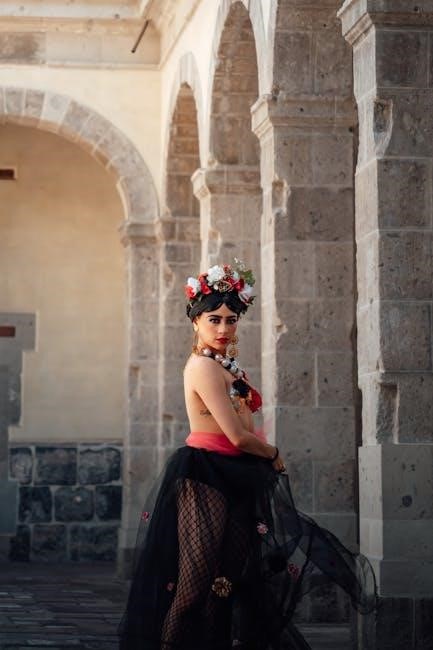
The story “Con Frida en el Altiplano” is vividly set against the backdrop of the Bolivian Altiplano, a high-altitude plateau in the Andes Mountains. This setting isn’t merely a location; it’s a crucial character in itself, profoundly influencing the narrative and Mikil’s experiences.
The Altiplano is characterized by its stark, breathtaking landscapes – vast plains, towering mountains, and the expansive sky. The altitude presents a physical challenge for newcomers like Mikil, impacting his acclimatization and daily life. The unique environment shapes the local culture, traditions, and way of life.
The narrative utilizes the Altiplano’s distinctive features to create a sense of immersion and authenticity. Descriptions of the landscape, climate, and local communities contribute to the story’s cultural richness. The setting provides a compelling contrast to Mikil’s Dutch origins, emphasizing his status as an outsider. The Altiplano’s remoteness and cultural distinctiveness are integral to the plot’s unfolding events.
Plot Summary: Mikil’s Journey and Frida’s Theft

The narrative centers around Mikil Van Heyderweide, a Dutch medical student traveling through Bolivia. His journey takes him to the Altiplano, where he relies heavily on his bicycle, affectionately named “Frida,” for transportation and exploration. Frida isn’t just a mode of transport; she represents Mikil’s freedom and connection to the region.
The core conflict arises when Mikil discovers that Frida has been stolen while he’s briefly away from the hotel. This theft sets off a chain of events as Mikil attempts to locate his beloved bicycle. The search becomes a microcosm of his broader experience navigating a foreign culture and dealing with unexpected challenges.
The story follows Mikil’s efforts to retrace his steps, interact with locals, and ultimately recover Frida. The theft isn’t simply a material loss; it’s a disruption to Mikil’s plans and a catalyst for personal growth. The plot emphasizes themes of adaptation, resilience, and the importance of human connection in unfamiliar surroundings.
The Significance of “Frida” (the Bicycle)
“Frida,” the bicycle, transcends its function as mere transportation within the story; it’s a deeply symbolic element. Representing Mikil’s independence and freedom, Frida allows him to explore the Bolivian Altiplano at his own pace, fostering a sense of connection with the landscape and its people.
The bicycle embodies Mikil’s personal journey and his immersion into a new culture. It’s a companion, a tool for discovery, and a tangible link to his home, providing comfort in an unfamiliar environment. The act of cycling itself symbolizes movement, progress, and the embracing of new experiences.
Consequently, the theft of Frida is not simply a loss of property, but a violation of Mikil’s sense of security and autonomy. The search for Frida becomes a metaphor for Mikil’s quest to regain control and re-establish his connection to the Altiplano. The bicycle’s name itself, a nod to Frida Kahlo, subtly hints at themes of identity and resilience.
Cultural Context: Bolivia and its Traditions
“Con Frida en el Altiplano” is deeply rooted in the cultural landscape of Bolivia, offering readers a glimpse into the traditions and daily life of the region. The story’s setting, the Altiplano, is a high-altitude plateau characterized by its unique geography, indigenous communities, and vibrant cultural heritage.

The narrative subtly introduces elements of Bolivian culture, such as local customs, traditional clothing, and the importance of community. While the provided excerpts don’t detail specific traditions, the story’s context implies an exploration of Aymara and Quechua influences, prevalent in the Altiplano region.
The story provides an opportunity to learn about the contrast between Mikil’s Dutch background and the Bolivian way of life. This contrast fosters reflection on cultural differences and encourages readers to appreciate the diversity of human experiences. The narrative implicitly invites exploration of Bolivian values, beliefs, and social structures, enriching the learning experience.
Language and Accessibility: Spanish Edition & Kindle Format
“Con Frida en el Altiplano” is primarily available as a Spanish edition, making it an ideal resource for intermediate Spanish language learners. The text’s accessibility is further enhanced by its availability in Kindle format, offering convenient reading on various devices – Kindle e-readers, computers, smartphones, and tablets.
The Kindle edition provides features that cater to language learners, such as adjustable font sizes, built-in dictionaries, and the ability to highlight and take notes. These tools facilitate comprehension and vocabulary acquisition. The digital format also allows for easy portability and access to the text anytime, anywhere.
The PDF resources associated with the book, as noted in available documentation, suggest supplementary materials designed to reinforce language skills. While the core text is in Spanish, the PDF exercises likely provide opportunities for practice and assessment. The combination of the Spanish narrative and interactive PDF materials creates a comprehensive learning package.
Educational Use: PDF Resources & Activities
The “Con Frida en el Altiplano” PDF serves as a valuable supplementary tool for educators and students alike, extending the learning experience beyond the core narrative. Available documentation indicates the PDF is packed with a range of activities designed to reinforce comprehension and language skills.
These resources include a variety of exercise types, specifically targeting key areas of language acquisition. Students are prompted to answer comprehension questions based on the story, ensuring they grasp the plot and characters. Sentence completion exercises further test understanding of context and vocabulary.
The PDF also incorporates grammatical practice, with a focus on verb conjugation – a crucial aspect of Spanish proficiency. Furthermore, descriptive tasks encourage students to visualize and articulate scenes from the story, enhancing their writing and descriptive abilities. These activities collectively provide a well-rounded approach to language learning, utilizing the narrative as a springboard for skill development.
Types of Exercises in the PDF: Comprehension Questions
A significant portion of the “Con Frida en el Altiplano” PDF is dedicated to comprehension questions, designed to assess a student’s understanding of the narrative’s intricacies. These aren’t simply recall-based; they encourage critical thinking about Mikil’s journey and the events unfolding in the Bolivian Altiplano.
The questions vary in format, ranging from direct inquiries about plot points – such as the theft of Frida, the bicycle – to more nuanced prompts requiring students to infer meaning from the text. They delve into Mikil’s motivations, his observations of Bolivian culture, and the challenges he faces as a foreign student.
The questions are structured to progressively increase in difficulty, starting with straightforward factual checks and culminating in analytical tasks. This approach allows students to build confidence and gradually refine their comprehension skills. The PDF’s emphasis on questioning transforms reading into an active learning process, fostering deeper engagement with the story and its themes.
Grammatical Focus in the PDF: Verb Conjugation
The “Con Frida en el Altiplano” PDF strategically incorporates verb conjugation exercises to reinforce Spanish grammar skills within a contextualized narrative. Recognizing that mastering verb forms is crucial for fluency, the PDF doesn’t present conjugation in isolation, but rather integrates it into activities directly related to the story.
Exercises commonly require students to conjugate verbs used by Mikil as he describes his experiences, interacts with Bolivians, and reacts to the theft of his bicycle, Frida. The focus extends beyond simply identifying the correct form; students are prompted to apply conjugations in sentences mirroring the story’s style.
The PDF targets a range of tenses – present, past (preterite and imperfect), and potentially future – depending on the specific section of the text being analyzed. This comprehensive approach ensures students gain practical experience with verb conjugation in various communicative contexts, solidifying their grammatical foundation.
Descriptive Tasks in the PDF: Scene Description
A significant component of the “Con Frida en el Altiplano” PDF centers around descriptive tasks, challenging students to recreate vivid scenes from the story using their Spanish vocabulary and grammatical skills. These exercises move beyond simple recall, demanding active engagement with the text and fostering creative expression.
Students are often presented with prompts asking them to describe the Bolivian Altiplano, Mikil’s hotel, or the moments surrounding the theft of Frida, his bicycle. The tasks encourage the use of adjectives, adverbs, and sensory details to paint a picture with words, mirroring the author’s descriptive style.
The PDF may include partially completed descriptions, requiring students to fill in missing details, or open-ended prompts allowing for more extensive responses. These activities not only enhance descriptive abilities but also deepen comprehension of the story’s setting and atmosphere.
Themes Explored in the Story
“Con Frida en el Altiplano” subtly explores several compelling themes beyond a simple tale of a stolen bicycle. A central theme revolves around adaptation and navigating unfamiliar cultural landscapes, as Mikil, a Dutch medical student, adjusts to life in Bolivia.
The story also touches upon the theme of loss and resilience, examining Mikil’s reaction to the theft of Frida, which represents more than just transportation – it’s a symbol of his independence and connection to his new environment. The narrative implicitly questions the concept of ownership and the impact of unexpected events on personal journeys.
Furthermore, the story provides a platform for examining cultural differences and the importance of empathy. While the provided document doesn’t explicitly detail extensive thematic analysis, the setting and Mikil’s experiences naturally lend themselves to reflections on contrasting lifestyles and perspectives. The PDF resources likely encourage students to consider these underlying themes through discussion questions and writing prompts.
Reflection on Cultural Differences (Based on available document)
Based on available information, “Con Frida en el Altiplano” implicitly encourages reflection on cultural differences through Mikil’s experiences in Bolivia. As a Dutch medical student, his perspective inevitably contrasts with the traditions and daily life of the Bolivian Altiplano.
The narrative, even in its summary form, highlights the ‘otherness’ of the setting, positioning Mikil as an outsider navigating a new environment. The theft of Frida, his bicycle, could be interpreted as a catalyst for deeper cultural understanding, forcing him to interact with locals and potentially challenge his preconceived notions.
The PDF resources, containing comprehension questions and descriptive tasks, likely prompt learners to analyze these cultural nuances. Students are encouraged to consider how Mikil’s background shapes his perceptions and how he adapts (or fails to adapt) to Bolivian customs. While the document doesn’t offer explicit analysis, it provides a framework for exploring these differences through language learning and critical thinking.
Availability and Purchase Options (Amazon Kindle)
“Con Frida en el Altiplano” (Serie América Latina) is readily available for purchase in digital format through Amazon Kindle. This accessibility allows language learners worldwide to easily acquire the text for study and enjoyment.
The Kindle edition, authored by Dolores Soler-Espiauba, offers the convenience of instant download and compatibility with a wide range of devices – Kindle e-readers, PCs, smartphones, and tablets. This format also includes features beneficial for language acquisition, such as adjustable font sizes, built-in dictionaries, and the ability to highlight passages and add notes.
Currently, the book is exclusively offered as a Kindle eBook. There is no indication of a print version being available. Potential buyers can find the book by searching “Con Frida en el Altiplano” on Amazon’s website. The Kindle edition provides a cost-effective and portable solution for accessing this valuable Spanish learning resource. Pricing may vary depending on regional Amazon stores.
Target Audience: Language Learners & Students
“Con Frida en el Altiplano” is specifically designed for students and individuals actively engaged in learning Spanish. The narrative’s complexity and vocabulary level are ideally suited for intermediate learners seeking to expand their linguistic skills within a culturally relevant context.
The accompanying PDF resource, filled with comprehension questions, verb conjugation exercises, and descriptive tasks, further enhances its value as an educational tool. These activities cater to diverse learning styles and reinforce key grammatical concepts.
The story’s setting in Bolivia and its exploration of cultural nuances make it particularly appealing to students studying Latin American culture. It provides an immersive experience, fostering a deeper understanding of Bolivian traditions and daily life. The text’s accessibility via Amazon Kindle ensures it’s readily available to a global audience of language learners.
Furthermore, the book’s relatively short length makes it a manageable and motivating read for students who may be intimidated by longer, more complex novels. It’s an excellent supplementary material for classroom use or independent study.
The Value of “Con Frida en el Altiplano” as a Learning Tool
“Con Frida en el Altiplano” proves to be a remarkably effective resource for Spanish language acquisition. The narrative, centered around Mikil’s journey and the theft of his bicycle, “Frida,” provides an engaging context for language learning.
The accompanying PDF elevates its educational impact, offering targeted exercises that reinforce comprehension, grammatical accuracy – particularly verb conjugation – and descriptive writing skills. These activities cater to various learning preferences, solidifying understanding.
Beyond language skills, the story fosters cultural awareness, immersing learners in the Bolivian Altiplano and its traditions. This cultural context enriches the learning experience, promoting a more holistic understanding.
Its availability as a Kindle eBook ensures accessibility and convenience for students worldwide. The book’s manageable length and relatable storyline make it an ideal choice for intermediate learners. Ultimately, “Con Frida en el Altiplano” is a valuable asset for anyone seeking to improve their Spanish while exploring Latin American culture.